
Artist Guide · 6 min read
AI Music Marketing for Artists
Anto Dotcom · Published
AI music marketing is using artificial intelligence to plan a release, prepare campaign materials and review results. Start with your release date, audience and approved assets. Use AI to turn those inputs into a calendar, draft talking points and test ideas for clips. Have an artist or campaign lead verify the facts and approve anything that goes out.
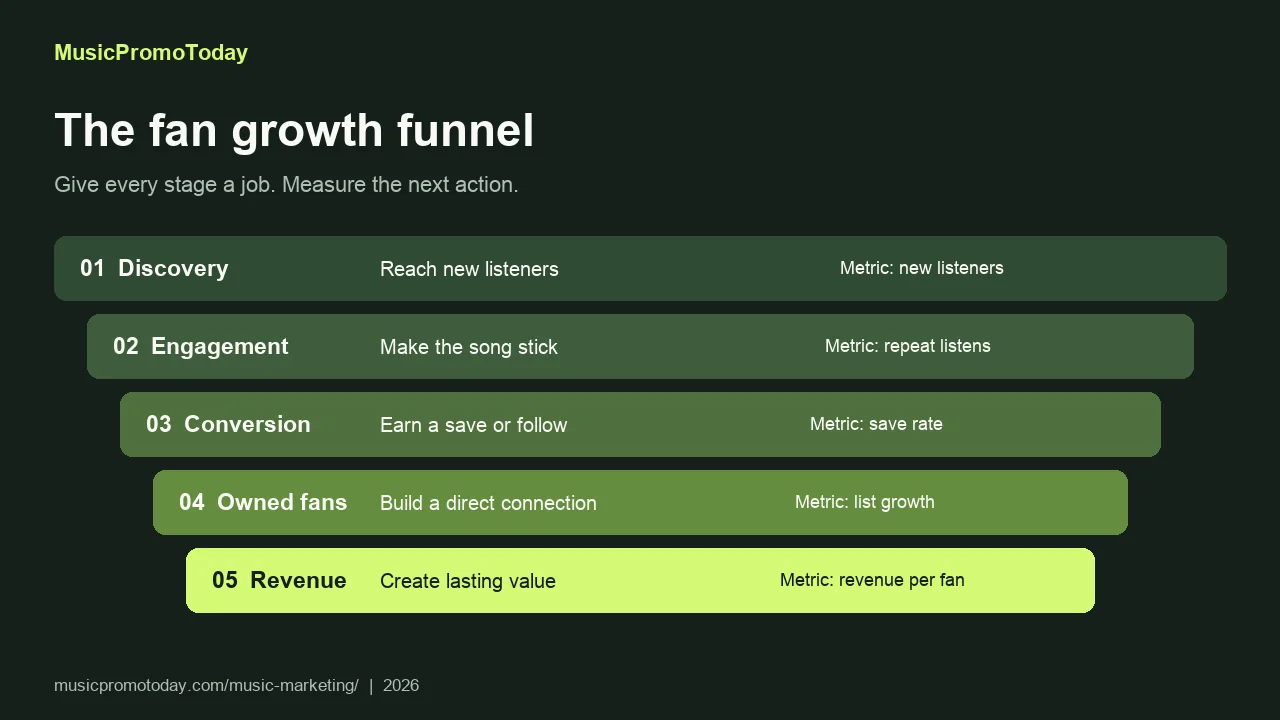
For the full strategy behind a release, read our music marketing guide. Use the workflow below when you have a finished song and need to decide what to do with it over the next few weeks.
Where AI is useful in a release campaign
| Campaign task | Give the AI assistant | Check before you act |
|---|---|---|
| Release planning | The confirmed date, available budget, deadlines and people on the team | Time for delivery, approvals and outreach |
| Short-form promotion | A transcript or timestamped notes from footage you can share | The musical moment, the opening line and the edit on a phone |
| Music PR | An approved bio, confirmed credits and why this release matters now | Every claim, each outlet's coverage and the contact details |
| Translation | Approved captions, the target market and a glossary of names | Tone and local phrasing with a fluent reviewer |
| Weekly reporting | Results by source and date, with a pre-release baseline | Definitions, time windows and whether the evidence supports the conclusion |
Choose one goal for each channel. A press pitch might aim for interviews with a local audience. A performance clip might aim to bring listeners to a tracked release link. That gives the team a clear reason to keep, edit or stop each activity.
A practical AI music release plan
Before release
Write down what you want to accomplish and what is ready today. List your distributor delivery date, cover artwork, approved song links, usable footage and the people who must approve the campaign. Ask for a calendar with one owner per task and an early deadline for anything that depends on outside approval.
For Spotify editorial pitching, make room to get the unreleased track into Spotify for Artists. Spotify says submitting an eligible song pitch at least seven days ahead gets the track onto followers’ Release Radar playlists. Editorial placement is a separate decision made by Spotify. Spotify’s editorial pitching guide
On release week
Make a small number of variations from footage that already fits your song. A single performance can supply a chorus cut, a lyric explanation and a clip introducing the release. Give each variation a different opening and use the same audience action, such as listening through the release link. A consistent destination makes it easier to compare your own posts.
Work from a verified press angle. If the song came from a specific place, scene or collaboration, use that detail to make it clear why a particular editor would care. Use AI to shorten a pitch or try a few subject lines after the story is approved. A person on your team should choose the contacts, confirm permissions and handle follow-ups.
After release
Pull results for the same dates and define what each source measures. Post views, tagged link clicks and streaming saves answer different questions. Ask the AI assistant to separate observations from explanations. Give the team the source figures and have them approve the next action.
If a clip draws views and very few release-link clicks, review the caption, link and audience fit before increasing spend. If a pitch draws replies, use the feedback to refine the next group of outlets. Record relevant placements as they happen so the campaign report can show what actually ran.
Copy this prompt to plan your next release
Build a release plan for my next single. Ask me for the release date, genre, audience, main goal, budget, approved release story and assets before giving advice. Divide the plan into preparation, release week and follow-up. For each task give me an owner, deadline, approval step and one metric. Use only the facts I provide. Flag claims or deadlines that need verification and suggest one change if the budget is tight.
For an independent pop artist with three weeks, one approved performance video and a small mailing list, a workable plan might start with a chorus clip and an email to existing subscribers. If the artist also has a documented local connection, test a small group of relevant press contacts. Reserve time in week two to turn the best-performing angle into a follow-up. This example is a planning exercise.
Approvals for AI-assisted promotional assets
- Facts and credits. Confirm names, collaborators, quote approvals, links and release dates in one shared brief.
- Audio and likenesses. Confirm permission to use any source footage, voice or imagery. Spotify’s impersonation policy addresses unauthorized vocal impersonation, including AI voice clones. Spotify’s impersonation policy
- Disclosures. Check the requirements at upload. YouTube lists realistic synthetic or meaningfully altered content, including AI-generated music, among its disclosure examples. It treats routine drafting and caption creation as production assistance. TikTok requires labels for AI-generated content containing realistic imagery, audio or video. YouTube’s disclosure guidance · TikTok’s labeling guidance
- Private material. Use notes, approved excerpts and anonymized reports when drafting with a tool outside your team. Check the terms before sharing unreleased masters, private contacts or client data.
Spotify’s AI Persona badge concerns the artist identity presented to listeners. Spotify separately describes AI credits for how music was made. If you’re using AI in the recording or presenting a synthetic artist identity, check your distributor’s requirements alongside the platform’s guidance. Spotify’s AI Persona announcement
Frequently asked questions
How can I use AI to promote my music?
Use it for a first-pass release calendar, pitch drafts, clip ideas and weekly report summaries. Give it an accurate brief with a release date and clear goal. Review every proposed claim and make the final channel decisions yourself or with a campaign team.
Can AI write a music PR pitch?
Yes. Give it a verified artist bio, release angle, song link and two or three relevant details. Ask for a short draft and have your publicist review the facts, outlet fit and tone.
How much does an AI-assisted music campaign cost?
Costs depend on the amount of human work, production, paid media and outreach in your plan. Ask for a written scope with quantities, approval steps, fees and a reporting schedule. Our music promotion proposal checklist shows which details to check before approving a budget.
Can AI secure an editorial playlist placement?
It can help you write and check the pitch. Spotify editors decide which eligible submissions they select. Use the official dashboard to submit and measure the outcome after release.
When should I hire a campaign team?
Consider bringing in a team when you need help choosing audiences, reaching relevant outlets and creators, testing ads, or reviewing and adjusting several workstreams in a short release window. Ask who owns approvals, outreach and reporting.
Plan your release with MusicPromoToday
Bring the song, date, audience and campaign goal. MusicPromoToday can help you define a scope for music promotion, from press and short-form creative to paid media and campaign reporting.