
What Music Marketers Can Learn From Dolly Parton
Dolly Parton's brand was never an accident. What artists can learn about memorability, ownership, world-building and trust.
Share this article
Copy the link or spread it on social.
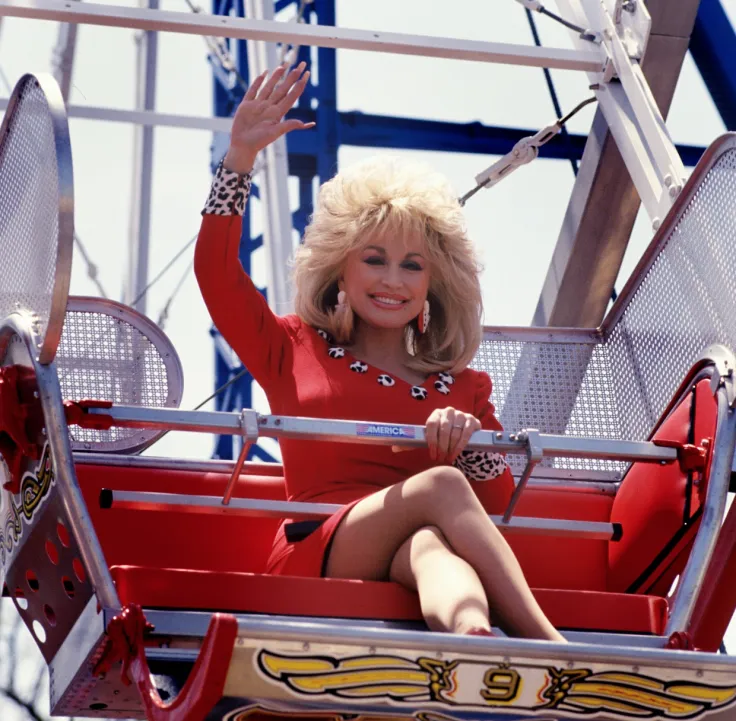
Dolly Parton’s Brand Was Never an Accident
What artists can learn about memorability, ownership, world-building and trust.
Dolly Parton died on August 25, 2026, in Nashville. She was 80.
The tributes will rightly celebrate the voice, the songs and the kindness. But for people who make or market music, there is another part of Dolly Parton’s legacy worth studying: how she built one of entertainment’s most recognizable and durable brands.
Dolly treated her image like a product, then spent six decades making that product feel human.
That is the work worth examining.
I love this song. RIP Dolly Parton 😢 pic.twitter.com/OV90vzetPH
— Nurses Against Dick Pics. 🪷🇺🇦 (@ClaudetteGGibs1) August 25, 2026
Own the Caricature
The wigs. The rhinestones. The unmistakable silhouette.
Then there was the line she repeatedly used about herself: “It costs a lot of money to look this cheap.”
Most artists spend their careers running from the cartoon the public draws of them. Dolly drew it first, made it louder and covered it in sequins.
Then she filled the costume with songs that were never a costume.
Poverty. Heartbreak. Work. Faith. Desire. Loyalty.
The lesson is not “wear more glitter.” It is to create a shape the market can remember in one second, then give that shape substance.
A silhouette someone can recognize from across a parking lot is a brand. An artist who looks, sounds and communicates like everyone else on the playlist is easily replaced.
Dolly made herself easy to parody, which made her impossible to forget. But if the image had been empty, the public would have lost interest decades ago.
The songs gave the image depth. The image gave the songs an unmistakable owner.
That combination is artist branding.
Keep the Songs
When Whitney Houston recorded “I Will Always Love You,” the world heard Whitney—but Dolly Parton retained the publishing rights and earned the songwriting and publishing income.
Years earlier, she had refused to let Elvis Presley record the song after his manager requested half of its publishing rights. That decision protected what Dolly understood to be one of her most valuable copyrights. The Library of Congress documents the story.
The performance is a campaign. The song is the asset.
Music marketing still focuses heavily on the week: the release date, the playlist, the clip, the tour announcement and the first burst of numbers.
Dolly built a catalog.
Covers, syncs, licensing opportunities and decades of royalties become possible when artists protect the work people continue humming after the campaign ends.
If you advise artists, the unglamorous question remains one of the most important:
Who owns the song when release week is over?
A hit performed by someone else is not automatically a loss of identity. It can be distribution at its most powerful.
Whitney Houston did not make Dolly smaller. She transformed the song into a global standard while Dolly’s name remained attached to the composition.
Great marketing creates attention. Ownership allows the artist to continue benefiting from that attention.
Build a Place, Not an Ad
People did not only listen to Dolly Parton. They entered her world.
They went to Dollywood. Families enrolled their children in the Imagination Library. She expanded into films, television, books, hospitality, attractions and experiences.
Near the end of her life, she was still developing the SongTeller Hotel and the Life of Many Colors Museum while exploring early-stage avatar performances that could extend her presence beyond the physical stage.
That is not merchandise. It is a world.
Advertisements expire. Places collect stories.
A theme park in the Smoky Mountains is the expensive version of a principle any artist can use: give fans somewhere to stand inside the brand instead of only asking them to look at it.
For most artists, that will not be a theme park.
It could be a residency, membership, fan community, annual event, private listening room, recognizable content format or recurring ritual that audiences cannot get from anyone else.
Dolly also understood something most corporate cause-marketing campaigns miss: purpose is strongest when it grows directly from the person behind the brand.
Her father was intelligent and hardworking but never learned to read or write. That experience inspired Dolly to start the Imagination Library in her home county before it expanded internationally.
She did not attach an unrelated charity to her image. She built something that emerged naturally from her family, her upbringing and her values.
Fans never needed to be sold on the connection.
It was the brand—with a shipping label.
Stay Specific, Stay Unaligned
Dolly never removed Appalachia from her identity to reach a larger audience.
She remained rooted in the Smoky Mountains, her family, her faith, her humor and her way of speaking. At the same time, she resisted being reduced to a political mascot or a product designed for only one demographic.
That combination is rare.
It is one reason a country singer became recognizable across generations, regions, genres and communities without becoming bland.
“For everyone” is usually how brands lose their personality.
Specificity combined with warmth is how they travel.
Artists are often told they must become more generic to become more accessible. Dolly demonstrated the opposite. The more clearly she expressed who she was, the easier it became for different audiences to find something meaningful in her.
Her brand could exist in a church, a gay bar, a theme park and a late-night television studio without feeling like a costume change.
She did not redesign herself for every room.
She made every room understand Dolly.
Create Consistency Without Becoming Predictable
Dolly’s visual identity remained remarkably consistent, but her career did not stand still.
She moved through country music, pop crossover, Hollywood, television, Broadway, books, business and philanthropy. Every expansion introduced her to a new audience while strengthening the same underlying identity.
That is the difference between consistency and repetition.
Consistency gives audiences something recognizable to hold onto. Repetition gives them nothing new to discover.
Artists do not necessarily need a complete rebrand every time the market changes. They need a clear central identity that can move through new formats without losing its meaning.
Dolly changed the channel without changing the person.
Trust Is the Strongest Marketing Asset
Dolly Parton accumulated something more valuable than followers: goodwill.
Her humor made her approachable. Her professionalism made her dependable. Her songwriting made her credible. Her generosity made people want to believe in her.
That trust allowed her to move across industries without audiences questioning whether she belonged there.
It also protected her from the exhaustion that eventually affects many celebrity brands. People were not simply aware of Dolly Parton. They felt that they understood her.
Marketing can purchase reach. It cannot purchase that kind of trust.
Trust is built through thousands of consistent decisions: how an artist speaks, what they attach their name to, how they treat collaborators, what they refuse and whether their public values match their private actions.
The strongest artist brands do not merely attract attention.
They make people comfortable staying.
The Playbook Beneath the Feeling
The world will remember how Dolly Parton made people feel.
Artists and marketers should also study the architecture beneath that feeling.
She made the caricature unmistakable and filled it with honest songs. She protected the assets. She created experiences people could enter. She expanded without abandoning her roots. She gave audiences new reasons to care without constantly asking them to reconsider who she was.
That was not accidental.
Dolly Parton’s greatest marketing achievement was not making people notice her. It was giving people a clear, consistent and emotionally meaningful reason to remember—and trust—her.
That is more than nostalgia.
It is one of the strongest artist-branding playbooks music has ever produced.