
Insights
UGC Is the New Hit Formula: Why Songs Go Viral
MusicPromoToday Staff · April 3, 2026
Share this article
Copy the link or spread it on social.
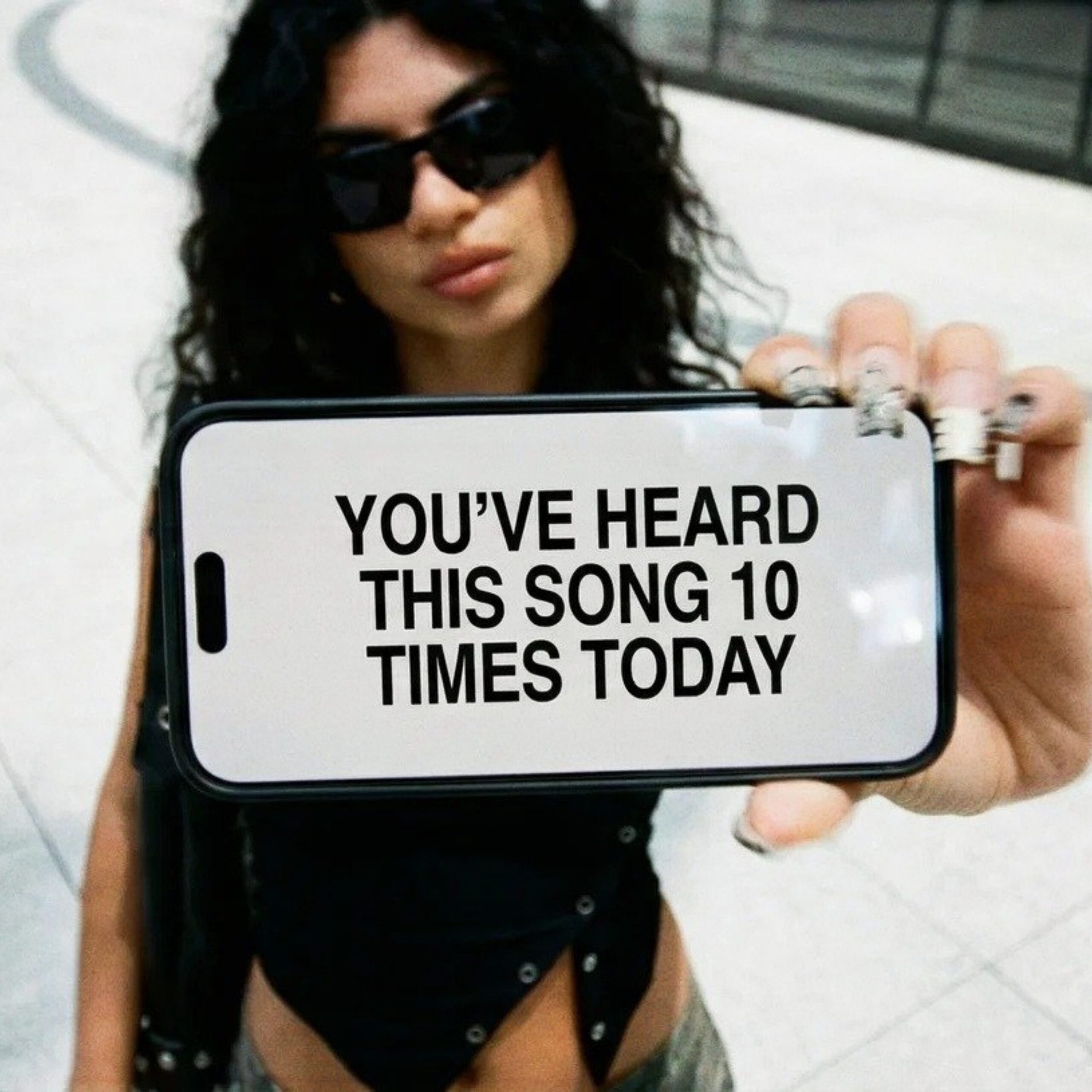
How UGC Is Rewriting the Rules of Music Virality in 2026
There was a time when breaking a record required radio spins, a distribution deal, and a label with the right connections. Today, a 15-second clip posted by a stranger with 400 followers can outperform a six-figure rollout — and the engine behind most of those moments is UGC.
User generated content has fundamentally altered how music travels. Not in theory. In documented, measurable outcomes. In 2024, 84% of songs that entered the Billboard Global 200 first went viral on TikTok before charting anywhere else. Going into 2026, that pipeline is more powerful than ever — but also more demanding. Artists who treat UGC marketing as a passive strategy are consistently being outmaneuvered by those who understand exactly what's driving the numbers.
What UGC Actually Means in a Music Context
The term gets used loosely, which causes real strategic confusion. In music promotion, UGC refers specifically to videos — dances, lip-syncs, reaction clips, aesthetic edits, transitions, covers, meme formats — created and published by fans or general users that incorporate an artist's music organically.
What additionally separates UGC music from other content formats is that the music itself is the product being promoted. When a UGC creator builds a video around a song, they're not treating the audio as background decoration. They're making it part of their identity on that platform, and every viewer who hears it is receiving a passive endorsement from someone they already follow and trust.
How Each Platform Moves Music, And Why They're No Longer Interchangeable
Understanding UGC marketing in 2026 means accepting that TikTok, Instagram Reels, and YouTube Shorts no longer serve the same function. They operate as three distinct stages inside the same discovery-to-conversion pipeline, and treating them as content mirrors of each other is one of the most common strategic errors teams make.
TikTok remains the primary discovery engine. The platform's architecture treats sound as a navigational category — every video is indexed by its audio, and the Sounds page for any track displays total usage count, trending velocity, and a direct creation prompt. When a sound accumulates rapid, diverse usage across different creator types and regions, the algorithm classifies it as a broad trend and distributes it exponentially further. A song doesn't go viral on TikTok because it's well-made. It goes viral because the right 15-to-30-second window exists for thousands of different UGC creators to build something original on top of it.
The most significant algorithmic shift heading into 2026 is TikTok's move to follower-first distribution. New content now reaches existing followers before it hits cold audiences — a structural reversal of the model that once let unknown accounts blow up overnight from the For You Page alone. Viral reach still happens, but it's now conditional on strong engagement signals from an established community first. That changes pre-release strategy entirely. Building an audience before dropping music is no longer optional — it's prerequisite.
Equally significant is TikTok's partnership with Apple Music, launched in March 2026, which introduced a Play Full Song feature allowing subscribers to stream complete tracks without leaving the app. Plays count as paid streams generating standard royalties. Combined with the existing Add to Music App feature — which has driven over 3 billion track saves across multiple streaming services — TikTok has constructed the most direct discovery-to-monetization bridge in its history. A fan can now hear a song through UGC and stream it in full, inside the same session, on a UGC platform that has effectively started functioning as a streaming gateway.
Instagram Reels, meanwhile, has settled into its role as the conversion and retention layer. Where TikTok ignites the initial momentum, Reels deepens it. The platform's 2026 algorithm overhaul rewards original creation — videos carrying TikTok watermarks took a 60–80% reach hit, while content built natively on Instagram pulled significantly higher distribution. DM shares have become Reels' strongest ranking signal, with over 694,000 Reels shared via direct message every minute. For music specifically, this rewards tracks that make someone want to send a Reel to a specific person — because it captured something they felt but hadn't said. That emotional precision is now algorithmically valuable.
YouTube Shorts completes the pipeline through longevity and searchability. With 200 billion daily views and a dedicated Shorts search filter launched in January 2026, music clips are now discoverable through standard YouTube search — weeks or months after original posting. That long-tail reach is something neither TikTok nor Reels can replicate. Every UGC clip on Shorts links back to the original track through the sound pivot page, feeding full music video consumption and creating a compounding discovery loop that extends well beyond the initial viral window.
What Makes a Song UGC-Ready
Not every song is built for this environment. The tracks that consistently generate UGC share structural characteristics that aren't accidental. They carry a self-contained, high-impact moment in the first 15 to 30 seconds. They have a hook that functions as a standalone clip — something that makes immediate emotional or rhythmic sense without requiring narrative context. Research points to 100–130 BPM as the sweet spot for dance-driven UGC, while songs with a dramatic emotional shift tend to dominate transition and storytelling formats regardless of tempo.
Beyond structure, the most resilient songs in this environment share what analysts are now calling blank-canvas energy — the capacity to serve as a credible soundtrack to wildly different types of content. A song with blank-canvas energy doesn't dictate how it's used. It absorbs whatever visual story a creator brings to it.
Hook placement, lyric memorability, and the presence of a distinct sonic fingerprint — a specific clap, a drop, an unusual vocal run — all factor into whether a track becomes a UGC creator's default audio choice or gets scrolled past entirely.
How Artists Engineer UGC Without Killing It
The central tension in any UGC marketing strategy is that the moment a campaign looks engineered, it stops converting. Audiences on these platforms have a finely calibrated sensitivity to manufactured trends, and the backlash when something feels forced is swift and public. The most effective campaigns in 2026 walk a specific line: structured enough to gain initial traction, organic enough to invite mass participation.
In practice, that means starting with a seeded first wave of 10 to 20 micro-influencers — accounts under 15,000 followers, where engagement rates average 18% compared to 3–5% for macro accounts. These initial posts establish the trend template and generate the early engagement signals the algorithm needs to classify the sound as emerging. Once organic users begin replicating the format, the campaign transitions into true UGC territory, and the momentum becomes self-sustaining.
Timing determines whether that momentum compounds or collapses. DaBaby's "Rockstar" accumulated over 400,000 UGC videos and needed more than a month of accumulation before its streaming peak arrived. BENEE's "Supalonely" sat for five months before traction built. The teams that abandon songs at the two-week mark are making a structural error rooted in a fundamental misunderstanding of how the UGC cycle works. It is not a sprint — it is a compounding curve that rewards patience most labels' marketing timelines don't accommodate.
For independent artists, the path looks different from a label campaign but achieves comparable results when executed with discipline. FloyyMenor and Cris MJ's "Gata Only" — released through indie distributor UnitedMasters — generated over 50 million TikTok video creations in 2024 and crossed one billion Spotify streams, making FloyyMenor the first Chilean artist to reach that milestone. In early 2026, H3adband's "Boo" debuted at #91 on the Billboard Hot 100 with a dance challenge as the only marketing vehicle. A UGC creator doesn't care whether a song came from a major label or a bedroom. They care whether it fits the moment they're trying to capture.
The Conversion Gap That Still Exists
Virality and sustainability are not the same metric, and conflating them is where most UGC strategies eventually break down. Research showes that only 23% of fans who discover an artist through social media go on to stream more of their catalog. Thirty-five percent simply follow the artist on the same platform they found them on — staying inside the app, never converting to streaming. Songs reach viral velocity 7x faster than they did in 2020, but each viral moment generating significantly fewer streams.
That conversion gap is the unsolved structural problem in UGC music strategy. TikTok's Play Full Song integration with Apple Music is a direct attempt to close it. So is the Add to Music App feature. But closing the gap fully requires more than platform infrastructure — it requires artists to give audiences something worth converting to. A catalog worth exploring. A presence worth following. A narrative that extends beyond the clip that caught someone's attention for 15 seconds on a Tuesday afternoon.
UGC is the most powerful music discovery mechanism that has ever existed. In 2026, that statement is backed by data, case studies, and a $31.7 billion global recorded music market that streaming built and short-form video now feeds. But discovery is the beginning of the work — not the end of it.
Flood TikTok and Reels With Your Sound — MusicPromoToday Influencer & UGC Marketing
Most artists understand that UGC content moves music. Fewer understand how to manufacture the conditions for it without destroying the organic feel that makes it work in the first place. That's the gap MusicPromoToday's Influencer & UGC Marketing service is built to close.
The scroll economy rewards authenticity. Users can skip high-production placements without a second thought, but they'll watch a 30-second clip of a real person using a song in a way that feels genuine. The fastest route to breaking a track isn't forcing it in front of people. It's deploying 50 vetted UGC creators simultaneously, each making content that feels native to their audience, all using the same sound. That volume creates the appearance of a trend — and algorithms respond to trends the same way audiences do.
MusicPromoToday (MPT Agency) connects artists with a verified network of micro-influencers and UGC creators across TikTok, Instagram Reels, and YouTube Shorts. The difference between this and a standard shoutout campaign is structural. Traditional shoutouts are one-offs — a single post that disappears inside 24 hours, recognized immediately as an ad, generating views that never convert to streams. A single post cannot trigger an algorithm. A wave can.
The service runs full UGC campaigns built around a Trend Brief — a creative direction document that tells UGC creators exactly what to film, matched to the song's genre and energy. Dance challenges, lifestyle vlogs, transitions, skits — the format is chosen based on what the music actually supports, not what's generically popular. That creative specificity is what separates content that gets replicated from content that gets scrolled past.
What artists receive goes beyond initial exposure. Every piece of content posted through the campaign lives permanently on the feed, continuing to surface organically through search and recommendations for months after posting.
The platform infrastructure exists. The audience is there. MusicPromoToday provides the network, the creative framework, and the campaign architecture to make a song feel like it's everywhere at once — because, for a concentrated window, it is.