
Insights
EMPIRE Distribution: Building a New Music Industry Model
MusicPromoToday Staff · April 14, 2026
Share this article
Copy the link or spread it on social.
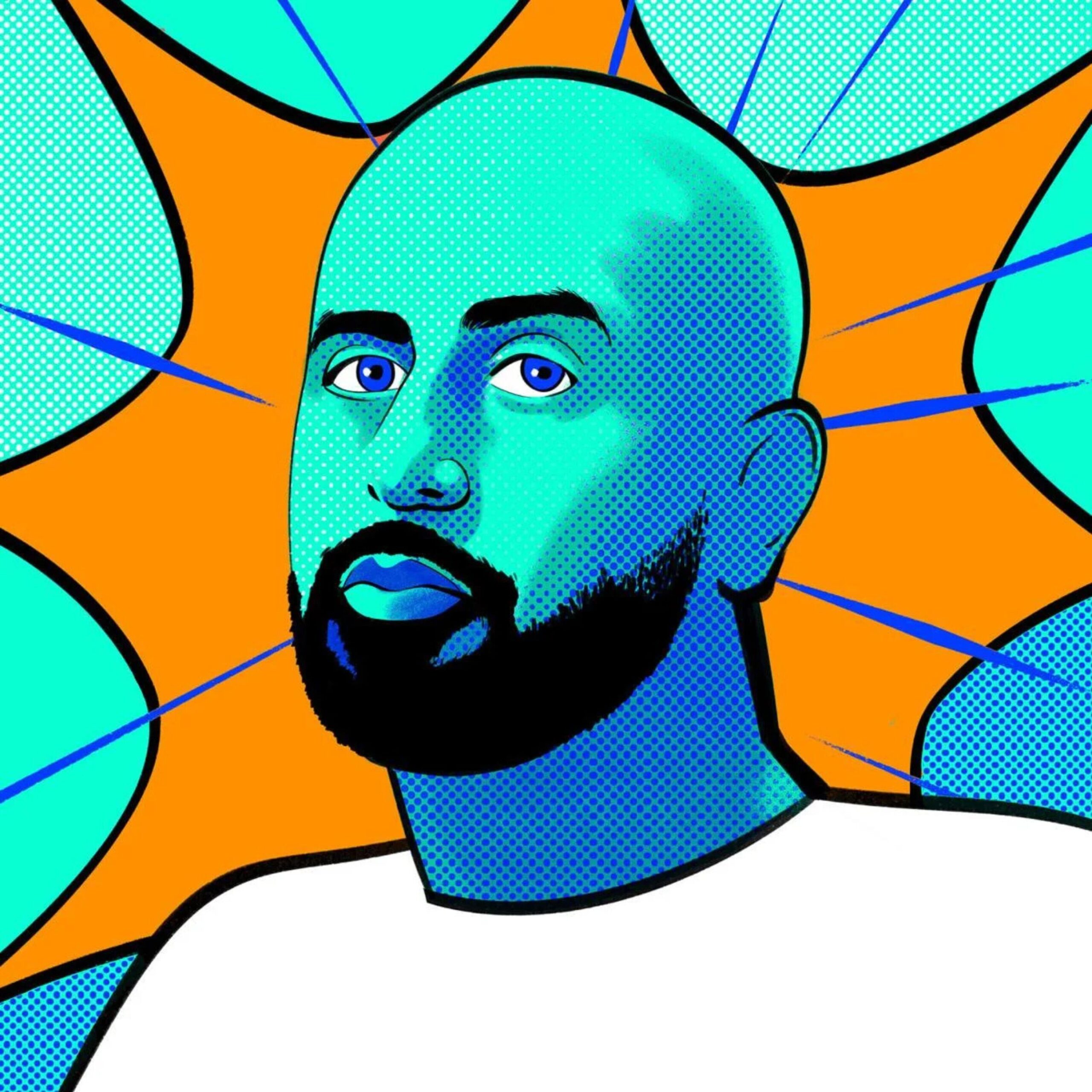
The music industry loves its origin stories. Most involve a chance encounter, a label bidding war, or a well-connected mentor opening doors. EMPIRE Distribution has none of that. What it has instead is a Palestinian-American entrepreneur who learned business fixing washing machines, built his own distribution software, and turned a maxed-out credit card into the most consequential independent record label of the streaming era.
Fifteen years after launching from a San Francisco apartment, EMPIRE Distribution now operates across five continents, employs approximately 1.2K people across 5 continents, and delivered 2024's longest-running number-one single. The company has never taken a dollar of outside investment. In an industry where three major record companies control over 80% of the market, that fact alone makes EMPIRE Distribution worth studying.
From Laundromat Repairs to Record Label Revolution
Ghazi Shami was born in 1977 in San Francisco to Palestinian immigrant parents. His father had fled Palestine during the 1948 conflict and eventually settled in the Bay Area, where he worked as a head chemist while also running a laundromat with his wife. By age four, Ghazi was helping repair washing machines. He grew up absorbing Too Short, Souls of Mischief, and the independent hustle that defined Bay Area rap.
Shami's path to music ran through technology. He worked at Sun Microsystems, Eloquent Technologies, and Audio Highway during the dot-com boom, gaining deep expertise in streaming media and compression technology. Simultaneously, he earned degrees in music technology and broadcast media while engineering sessions at Hyde Street Studios for local artists.
The bridge between these worlds came around 2006, when Shami took a role as Director of Urban at INgrooves, an independent distributor later acquired by Universal Music Group. There, he introduced dozens of Bay Area artists to digital revenue for the first time — and witnessed the inefficiencies that defined the traditional system. Opaque royalty reporting. Glacial payment schedules. Record deal structures that stripped artists of ownership.
By 2010, he had seen enough. Rather than continue working within a broken system, he decided to build something new.
A Different Kind of Record Deal
EMPIRE Distribution launched in 2010 from Shami's home in San Francisco. The initial operation was purely digital distribution, built on proprietary software developed in-house by Shami. This technology bypassed existing intermediaries and delivered music directly to streaming platforms with unprecedented speed — a critical advantage in hip-hop's rapid-fire release culture.
Three structural decisions separated EMPIRE Distribution from traditional music labels from day one. First, non-exclusive contracts that allowed artists to retain ownership of their masters. Second, monthly royalty payments with a transparent online portal — at a time when quarterly or semi-annual payouts remained industry standard. Third, revenue splits that heavily favored the artist.
Shami's philosophy was straightforward. "You get the best out of an artist if you treat them like your partner, rather than someone who is subservient to you," he told Music Business Worldwide in 2018.
The validation came quickly. In 2011, EMPIRE handled distribution for Top Dawg Entertainment releases and distributed Kendrick Lamar's Section.80 — which debuted at number one on Billboard's Top Heatseekers Albums. This wasn't a traditional record deal. It was a distribution partnership. But it proved the model could work at scale.
Building a Roster That Redefined Independent Success
What followed was a systematic accumulation of talent that major record companies had either overlooked or undervalued. EMPIRE Distribution became the first distributor to release music from Trinidad James, Migos, K Camp, Rich Homie Quan, and Rocko — establishing an early foothold in Atlanta's trap explosion before the majors recognized its commercial potential.
The label division launched in 2014, transforming EMPIRE Distribution into the hybrid distributor-label model that became its signature. Anderson .Paak's Malibu earned Grammy nominations. Fat Joe and Remy Ma's "All The Way Up" followed suit. DRAM's "Broccoli" became a multi-platinum hit.
The momentum accelerated from there. XXXTentacion's debut album debuted at number two on the Billboard 200. Tyga’s “Taste” featuring Offset became a massive commercial success, ultimately earning RIAA Diamond certification (10× platinum) and marking one of the biggest hits of his career.
Perhaps no signing better illustrated EMPIRE Distribution's appeal than Young Dolph. The Memphis rapper famously turned down a $22 million major label offer to sign with EMPIRE Distribution and remain independent — a decision that electrified the indie music community and demonstrated that artists increasingly valued autonomy over advance money.
From Hip-Hop to Global Multi-Genre Operation
The most strategically ambitious chapter of EMPIRE Distribution's growth has been its systematic expansion beyond hip-hop. Each new genre vertical followed the same playbook: hire executives with authentic cultural connections, sign artists early, and invest before the mainstream catches on.
The company deepened its presence in Latin and country music through dedicated divisions, while continuing to build on early relationships across international markets. Its Nashville operations positioned EMPIRE within the evolving country landscape, including its role in the rise of crossover artists like Shaboozey.
The Africa expansion may prove most consequential. EMPIRE Africa officially launched in 2022 with a hub in Lagos, through partnerships with artists including Fireboy DML, Asake, and other Afrobeats stars. The results were immediate: EMPIRE Distribution held the top three artists, top two songs, and top album on Nigeria's TurnTable Charts, controlling the number-one position for 35 of 52 weeks in 2022.
More recent moves include the acquisition of electronic label Dirtybird Records and continued global partnerships, reinforcing EMPIRE’s position as a multi-genre, international music company.
What EMPIRE Distribution Proves About the Modern Music Industry
The streaming era created a structural opening for tech-native distributors willing to build proprietary infrastructure and move faster than traditional record companies. EMPIRE Distribution capitalized on that shift early, positioning itself at the intersection of music and technology.
Artist-favorable economics proved to be a competitive advantage, not just an ethical stance. With non-exclusive deals and monthly royalty payments, EMPIRE attracted artists seeking autonomy — a shift underscored by figures like Young Dolph, who publicly chose independence over major-label advances.
Geographic and genre diversification further strengthened the model. From hip-hop to Afrobeats, Latin, and country, EMPIRE expanded into multiple markets, creating a global, multi-genre operation that reduced reliance on any single scene.
As the company’s influence has grown, so has its visibility across the industry, with founder Ghazi Shami appearing on Billboard’s cover and consistently ranking among its Power 100 executives.
Fifteen years in, and still operating independently, EMPIRE has evolved from a distributor into a broader music-industry infrastructure player — a trajectory that reflects not only where the business has been, but where it is heading.
In many ways, the rise of MusicPromoToday (MPT Agency) reflects the same broader shift that enabled EMPIRE Distribution to thrive: a move towards specialized, tech-driven services that replace the one-size-fits-all label model. Today’s independent artists don't rely on a single entity to do everything — they build ecosystems. Distribution, marketing, branding, and audience growth are now modular, MusicPromoToday has become an essential partner in turning independence into sustainable career momentum.