
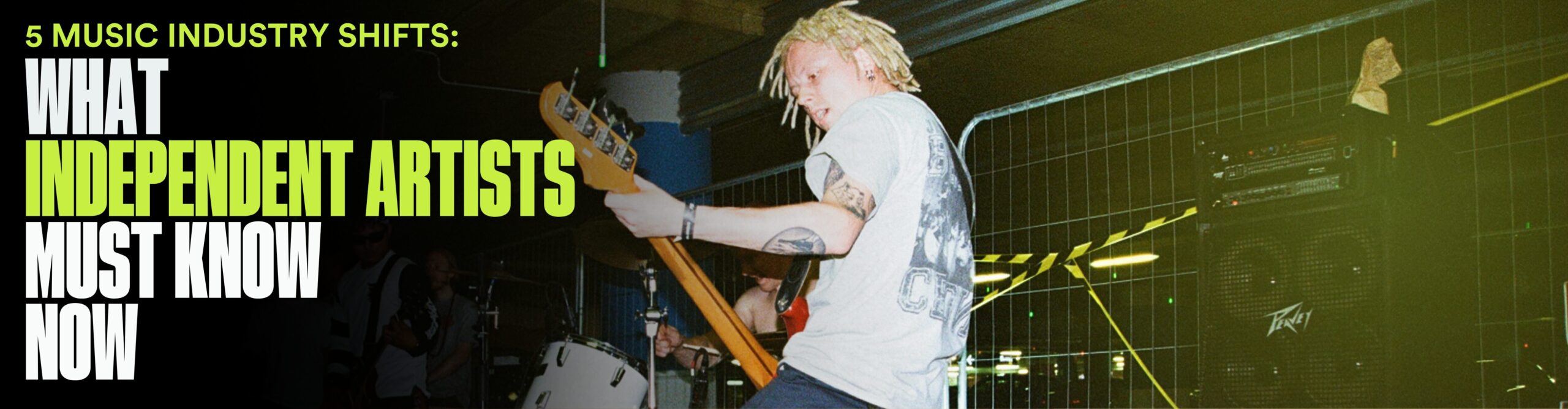
5 Music Industry Shifts: What Independent Artists Must Know Now
The music industry in 2026 is not the same ecosystem it was twelve months ago.Independent artists still relying on outdated strategies are discovering those playbooks no longer apply. Distribution platforms are consolidating under major-label ownership. Streaming thresholds are eliminating earnings for the majority of catalog tracks. Touring economics have collapsed for acts below arena level.
These are structural shifts already underway, and how you position for them now determines who builds a sustainable career in the music industry and who gets squeezed out.
1. The Indie Music Distribution Crisis Nobody Is Discussing
The most consequential shift in the music business this year has received almost no mainstream coverage. In February 2026, Universal Music Group completed its acquisition of Downtown Music Holdings, bringing CD Baby, FUGA, and Songtrust under UMG’s Virgin Music Group umbrella. Millions of creators across 145 countries woke up to discover their “independent” distributor now answers to the largest major label on earth.
This follows Believe’s privatization in mid-2025, which took TuneCore off the public market. Now DistroKid — handling a significant share of all new music releases globally — is rumoured to be exploring a sale that could value the company in the billions.
The ownership map has shifted dramatically. UMG controls CD Baby, FUGA, and Songtrust. Sony owns AWAL and The Orchard with AWAL operating invite-only at a low acceptance rate. The truly independent options — Ditto, Symphonic, RouteNote, and others — collectively represent a small fraction of the market. Over 200 industry executives warned against further consolidation.
How to position:
Audit your distribution agreement. Understand the ownership chain. Diversify across platforms where possible. Prioritize distributors that remain independently owned.
2. Streaming Thresholds Are Eliminating Earnings Across Platforms
Spotify’s minimum stream threshold, active since early 2024, has demonetized a significant portion of tracks on the platform. Spotify argues that nearly all actual listening still occurs above that threshold. The reality for emerging artists: catalog tracks that once generated modest but meaningful revenue now generate nothing.
The more alarming development happened in early 2025 when Amazon Music introduced its own streaming thresholds following a licensing deal with UMG. According to IMPALA, the majority of indie repertoire was demonetized overnight — with no prior consultation.
This is no longer an isolated platform policy. It is a pattern spreading across the music industry’s streaming ecosystem.
The math remains difficult regardless of platform. Spotify pays fractions of a cent per stream, meaning artists need hundreds of thousands of plays to reach even modest payouts. Tidal pays the highest per-stream rate in the industry but reaches a fraction of Spotify’s user base.
How to position:
Diversify revenue streams strategically. Treat streaming as a discovery mechanism rather than a primary income source. Focus promotion on converting streams to direct fan relationships where you capture more value.
3. The Touring Affordability Collapse Hits Critical Mass
A Ditto Music survey found that the vast majority of independent artists can no longer afford to tour. Over half had turned down touring opportunities for financial reasons. Fuel costs, crew wages, and hotel rates in major markets have all risen sharply since pre-pandemic levels.
The band Dry Cleaning — three critically acclaimed albums deep on 4AD — rescheduled a US tour in January 2026 due to touring costs that no longer make financial sense.
The indie music industry is experiencing a structural divide between arena-level acts and everyone else.
How to position:
Adopt micro-residency models — fewer cities, multi-night stays — to reduce travel costs. Use streaming data to route tours through markets where fans actually exist. Explore hybrid models combining in-person performances with ticketed livestreams.
4. Sync Licensing Remains the Overlooked Revenue Engine
Global sync revenues reached significant levels in 2025, yet this market receives far less mainstream coverage than streaming or touring in music industry trend discussions. It represents one of the most accessible revenue streams for independent artists.
The structural advantage for indies is significant. Artists who control both masters and publishing are “one-stop” licensing sources. Music supervisors working under tight clearance deadlines increasingly prefer this simplicity over navigating major-label bureaucracy.
Fee ranges vary widely depending on placement type. A podcast placement generates modest income. A TV show placement pays considerably more upfront. A national TV commercial can generate life-changing money — all with backend performance royalties that continue paying for years.
Micro-licensing platforms have proliferated. Platforms like Musicbed and Songtradr connect independent artists directly with sync opportunities and brand partnerships that expand access beyond traditional channels.
How to position:
Ensure you control both masters and publishing. Register with micro-licensing platforms. Create instrumental versions of your strongest tracks. Build a sync-ready catalog with clean masters and organized metadata.
5. Superfan Infrastructure Has Finally Arrived
The music business talked about superfan monetization for years. In 2026, the infrastructure is actually being built.
Luminate classifies a significant portion of US music listeners as superfans. These are not casual consumers. They purchase vinyl — US vinyl revenue surpassed a billion dollars for the first time in decades. They buy merchandise. They attend multiple shows. They subscribe to exclusive content.
The practical revenue stack follows a pyramid. Email capture and Bandcamp form the base. Fan analytics and quality merchandise sit in the middle. Subscriptions with exclusive content occupy the top.
How to position:
Build your email list before you need it. Launch a Bandcamp presence if you lack one. Create tiered offerings that reward deeper engagement. Treat your most dedicated listeners as a community to nurture.
The Common Thread
These five shifts share something important. They reward artists who build direct relationships with fans and diversify income sources.
The music industry in 2026 is consolidating at the top while fragmenting opportunity at the bottom. Independent artists who recognize this — and position accordingly — will find more paths forward than those waiting for the old models to return.
They are not returning.
The artists who thrive in this environment won’t do it by accident. MusicPromoToday, also known as MPT Agency, has delivered over 1,500 campaigns for independent artists — focused on real results, strategic positioning, and the infrastructure that turns releases into careers.
Ready to position for what’s next? Work with MusicPromoToday now.

