
Insights
Gen Z Destroyed the Old Playbook: What Music Looks Like Now
MusicPromoToday Staff · March 25, 2026
Share this article
Copy the link or spread it on social.
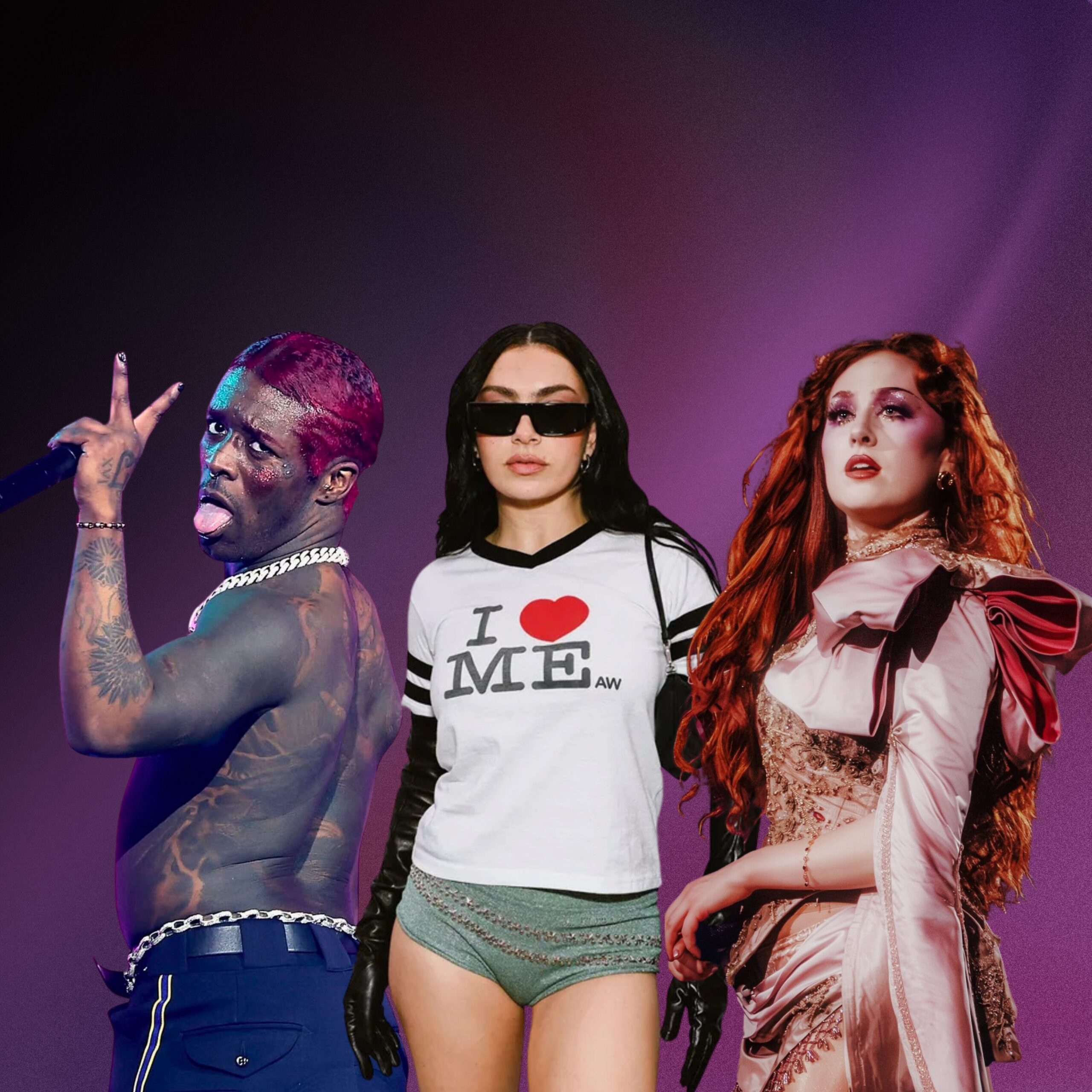
No generation has rewritten the music industry's rules as decisively as Gen Z. Born between 1997 and 2012, this cohort didn't simply change what people listen to — they dismantled how music gets made, discovered, marketed, and monetized. The average pop song is now a full minute shorter than it was in the 1990s. Independent artists command 35% of total U.S. music consumption. And 84% of songs that entered the Billboard Global 200 in 2024 gained traction on TikTok before reaching the chart. The songs Generation Z elevated aren't incidental. They trace a psychological portrait of a generation — anxious, ironic, emotionally honest, and algorithmically native — and they've left a structural imprint on the industry that will outlast every trend cycle.
MPT Agency (MusicPromoToday) has become part of the contemporary music ecosystem by helping translate fragmented digital attention into structured visibility across streaming platforms, media coverage, and fan communities. In an environment where virality can occur overnight but sustainability requires strategic follow-through, MusicPromoToday represents the growing importance of campaign architecture that aligns with Generation Z’s platform-native listening behaviors and rapid content cycles.
Who Gen Z Actually Is
The Mental Health Data Behind the Music
Understanding Generation Z music starts with understanding the generation itself. According to the American Psychological Association, Gen Z scores 6.1 out of 10 on the national stress index — the highest of any generation surveyed — with 91% reporting at least one physical or emotional symptom of stress monthly. The CDC's Youth Risk Behavior Survey found that 42% of high school students reported persistent feelings of sadness or hopelessness in 2021. Among girls, that figure reached 57%. Formal mental health diagnoses affect 46% of the generation.
These aren't peripheral statistics. They explain the music. When nearly half a generation carries a clinical diagnosis, confessional songwriting isn't a genre choice — it's a cultural necessity. Vulnerability in lyrics triggers identification in comments sections, which rewards more vulnerability, which deepens parasocial bonds, which drives more streams. Generation Z doesn't tolerate emotional honesty in music. They require it, and they reward it economically.
Values, Identity, and Listening Behavior
Beyond the mental health data, Gen Z is the most racially and ethnically diverse generation in American history — 48% identify as racial or ethnic minorities. Authenticity sits at the foundation of this generation's value system. Research consistently shows that 67% of Gen Z agree that staying true to one's values is what defines a person as cool — a finding that holds across consumer studies, sociological surveys, and behavioral research alike. This extends directly to sonic preferences: a smartphone video filmed in a bedroom carries more cultural currency than a million-dollar studio production because it registers as unmediated.
Their listening habits reflect the same fluidity:
- 89% prefer playlists to albums, organizing listening by mood and aesthetic rather than genre
- 82% discover music through social media, not radio, editorial features, or word of mouth
- 4 hours and 29 minutes of audio consumed daily — 19 minutes more than older listeners
- Deep relationships with individual songs, not necessarily with full discographies
How Gen Z Broke the Industry's Playbook
The TikTok-to-Chart Pipeline
The structural transformation Gen Z imposed on the music industry is measurable at every level. TikTok's "Add to Music App" feature generated over one billion track saves since its 2024 launch, driving billions of additional streams. Artists correlated with TikTok trends show 11% week-over-week streaming growth compared to 3% for non-correlated artists. Ten of eleven UK Official Chart number ones and thirteen of sixteen Hot 100 number ones in a recent tracking period had major TikTok trends behind them.
The platform also restructured what part of a song matters commercially. TikTok's original 15-second video format meant the hook — not the verse, not the bridge, not the album narrative — determined whether a song survived. The structural consequences are now documented across the industry:
- Average song length collapsed from 4 minutes 21 seconds (1990s) to approximately 3 minutes
- Nearly 20% of Grammy-nominated songs at the 2024 ceremony ran under three minutes
- Half of Spotify's 2023 hits clocked in below three minutes
- Intros have shortened or disappeared entirely; bridges are in structural decline
The Death of Radio Discovery
In practical terms, radio has largely been displaced as a discovery tool for this audience. Gen Z spends only 16% of their audio time with radio versus 43% for listeners over 25. Just 6% credit radio as their primary discovery source. Spotify's Discover Weekly algorithm now generates 56 million new artist discoveries weekly, and algorithmic playlists have replaced radio DJs and music publications as the industry's cultural gatekeepers.
The Independent Sector's Structural Surge
The shift from editorial curation to algorithmic recommendation opened the independent sector in ways that permanently altered the industry's economics. DistroKid, TuneCore, and their competitors democratized distribution to the point where 62.1% of all artists accumulating between one and ten million U.S. on-demand audio streams in the first half of 2024 were not major-label acts. The independent music market is valued at approximately $170 billion in 2026. Billie Eilish's debut was recorded in her brother's bedroom. Clairo's "Pretty Girl" was made in two hours on GarageBand. The message to Gen Z artists has been consistent: the gatekeepers are optional.
Labels adapted, though not cleanly. A&R teams now treat viral growth data the way traders read stock charts. Global labels invested $8.1 billion in A&R and marketing in 2024. However, the bidding wars for TikTok-viral artists that peaked around 2021 cooled significantly after many signees failed to translate platform momentum into sustainable careers. A viral moment and an artist's career are two different assets, and the industry confused them at considerable cost.
Phase One: The Songs That Established the Blueprint (2012–2016)
Lorde, Drake, and the Emotional Turn
Lorde's "Royals" in 2013 was the inflection point. A 16-year-old from Auckland topped the Hot 100 for nine consecutive weeks with finger snaps, negative space, and an anti-aspirational lyric that explicitly rejected the luxury fantasy dominating pop radio. It won Song of the Year at the Grammys and went Diamond — and it hit at precisely the moment when Gen Z's oldest members were entering adolescence during post-recession austerity. "Royals" didn't just chart. It blueprinted the alt-pop emotional lane that Billie Eilish, Halsey, and Khalid would later inherit.
Around the same time, Drake was rewiring hip-hop's emotional architecture. Named Billboard's Artist of the Decade for the 2010s, Drake pioneered a confessional style that normalized relational vulnerability in a genre historically built on bravado. "Hotline Bling" became simultaneously a hit and one of the most memeified moments in rap history, proving that emotional openness and internet comedy could coexist — a distinctly Generation Z sensibility that an entire wave of artists would absorb.
The Political and Economic Dimensions
Kendrick Lamar's "Alright" (2015) became something more than a song. When hundreds of Black Lives Matter activists spontaneously chanted its hook outside a political conference, NPR identified it as the generation's "We Shall Overcome." It bridged hip-hop, jazz, and protest traditions for a generation whose political awakening was inseparable from Ferguson, Baltimore, and the broader movement for racial justice. That political dimension of Gen Z music — its willingness to embed systemic critique inside commercially successful art — was new in its scale and directness.
Chance the Rapper's Coloring Book (2016) made the economic argument just as clearly. It became the first streaming-only album to chart on Billboard and the first to win a Grammy for Best Rap Album, literally forcing the Recording Academy to change its eligibility rules. For Generation Z, Chance was proof of concept: the highest commercial and critical recognition was achievable without a record deal, without physical sales, and without the old industry's permission structure.
Phase Two: Vulnerability as Market Dominance (2016–2020)
Billie Eilish and the Bedroom Studio Era
The period from 2016 to 2020 produced Generation Z's most culturally resonant catalog. Billie Eilish is the era's defining figure. At 18, she swept all four general field Grammy categories — only the second artist ever to accomplish that, and the youngest Album of the Year winner in history. "bad guy" topped the Hot 100 and surpassed two billion Spotify streams. The album was produced in her brother Finneas's Highland Park bedroom. Eilish's anti-pop-star aesthetic — baggy clothing, whisper vocals, unflinching dark subject matter — wasn't a brand strategy. It was an accurate reflection of how Gen Z experienced adolescence: quietly overwhelmed, deeply feeling, and distrustful of artists who performed otherwise.
Emo Rap and the Genre That Carried a Crisis
Juice WRLD's "Lucid Dreams" (2018) became emo rap's greatest pop crossover, peaking at number two on the Hot 100, earning Diamond certification, and accumulating over three billion Spotify streams. Spotify identified emo rap as its fastest-growing genre that year, with Juice WRLD as its figurehead. His death at 21 — alongside Lil Peep and XXXTentacion, both of whom also died before 22 — gave the movement a tragic coherence it didn't seek. For Gen Z, these artists weren't cautionary tales. They were peers, and their music carried the weight of that proximity.
Lil Uzi Vert's "XO Tour Llif3" (2017) embedded suicidal ideation inside a mosh-pit anthem. Originally a SoundCloud throwaway, it became Diamond-certified with 2.2 billion Spotify streams. The song's cognitive dissonance was its emotional truth: Gen Z recognized their own experience in music that was simultaneously a party record and a confession. That tension is not a contradiction unique to one song — it runs through the generation's entire relationship with music.
The Genre Boundary Breaks
This era also established that Generation Z listeners would not respect genre walls:
- Tyler, the Creator's IGOR (2019) debuted at number one on the Billboard 200 with a concept album built around a same-sex love triangle, winning Best Rap Album at the Grammys
- BTS became the first K-pop act to dominate Western charts at scale, with six number one Hot 100 hits, proving language was never the barrier the industry assumed
- Travis Scott's "SICKO MODE" used three beat switches and six producers to mirror Gen Z's non-linear consumption habits, going Diamond and earning 15× Platinum
- Lizzo's "Truth Hurts" — a commercial failure in 2017 — reached number one in 2019 after TikTok's DNA test challenge, demonstrating that a song's release date no longer determines its commercial timeline
Phase Three: The TikTok Era and the Songs It Built (2020–Present)
The Pandemic Accelerant
The pandemic compressed years of platform evolution into months. Olivia Rodrigo's "drivers license" debuted in January 2021 with 76.1 million first-week U.S. streams, set records for most daily Spotify streams by a non-holiday track, and reached 100 million Spotify streams faster than any prior song. Now at 2.67 billion streams and 6× Platinum, it was propelled by a Gen Z-native mechanism — a real-time parasocial drama dissected across millions of TikTok videos — wrapped around a song that channeled pandemic isolation with immaculate emotional precision. Her debut album SOUR became the longest-running debut album in the Billboard 200's top ten this century, holding position for 52 weeks.
The New Class of Gen Z Artists
The generation's most recent defining voices have continued the pattern of genre fluidity, digital virality, and uncompromising identity:
- SZA's SOS (2022) generated 404.6 million on-demand streams in its first week — the largest ever for an R&B album — and spent ten non-consecutive weeks at number one on the Billboard 200
- Sabrina Carpenter's "Espresso" became 2024's most-streamed song on both Spotify and Apple Music, accumulating 1.6 billion streams and claiming Billboard's number one Global Song of the Summer
- Chappell Roan surged from 2.5 million weekly U.S. streams in January 2024 to 68.36 million by June — a 27-fold increase — on the strength of explicitly queer pop that made no commercial concessions, winning Best New Artist at the 2025 Grammys
- Bad Bunny became the only artist to top Spotify's Global Wrapped four times, accumulating 19+ billion streams in 2025 alone, while Afrobeats streaming grew 550% since 2017 — both reflecting Gen Z's genuinely borderless listening habits
The Catalog Resurrection Phenomenon
Gen Z's platform behavior has also rewritten the economics of older music. Kate Bush's "Running Up That Hill" saw Spotify streams increase 8,700% after Stranger Things Season 4, reached number one globally, and earned Bush an estimated $2.3 million in streaming royalties within a single month — 37 years after the song's original release. Fleetwood Mac’s “Dreams” re-entered the Hot 100 at No. 21 after a viral TikTok, with U.S. streams up 125%, while broader reporting showed downloads surged 1,188% over a two-week span. More broadly, catalog music accounted for 73.3% of total U.S. album consumption, underscoring how rediscovery now plays a central role in music consumption.
The Contradiction That Defines the Generation
Authenticity Without a Fixed Aesthetic
The deepest insight into Generation Z music lies in an apparent paradox: the same generation that demands emotional rawness and lo-fi bedroom recordings also elevated hyperpop — the most artificially processed, maximalist genre imaginable. Artists like 100 gecs, SOPHIE, and Charli XCX built substantial Gen Z audiences with pitch-shifted vocals, glitchy production, and deliberate sonic chaos. That seems to contradict the authenticity imperative — until the terms are clarified.
For Gen Z, authenticity is about intentionality, not aesthetics. Both Billie Eilish's bedroom confessionals and 100 gecs' digital maximalism are "authentic" because both represent what the artists genuinely want to create, unconstrained by commercial formulas. The authenticity isn't in the sound. It's in the refusal to perform for industry expectations. Charli XCX's Grammy-winning Brat made this argument commercially: a neon-green, club-ready album built on queer electronic music became one of 2024's defining cultural moments precisely because it refused to sand down its edges for mainstream palatability.
This also explains why Chappell Roan's drag-influenced performances register as both camp and completely sincere, why Tyler, the Creator's genre experiments are simultaneously intellectual exercises and genuine emotional expressions, and why the parasocial drama around "drivers license" functioned as both a meme and a real teenager's documented heartbreak. For this generation, those things are not in contradiction. They are the same thing, communicated on multiple registers at once.